
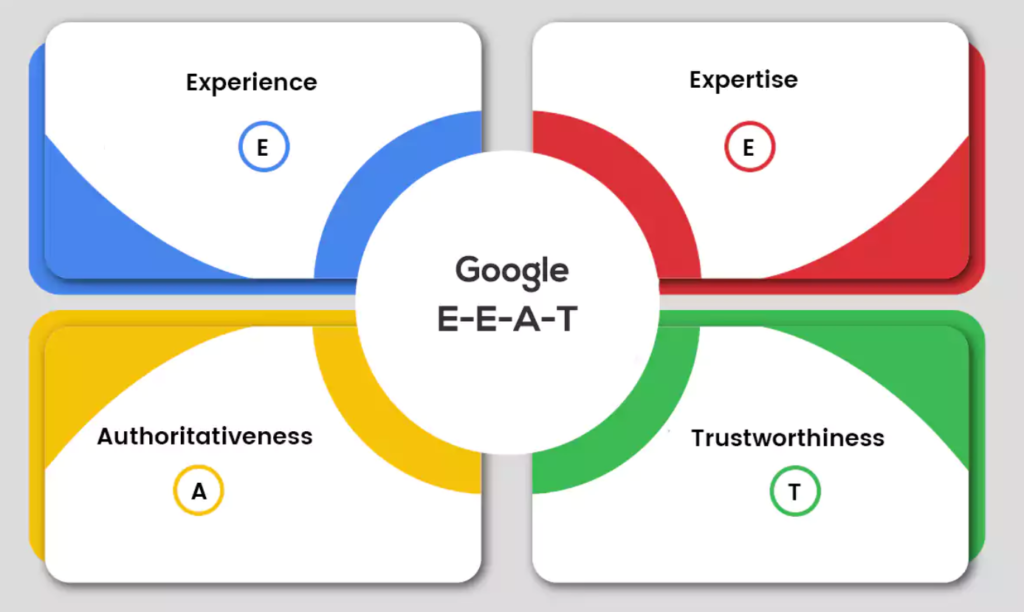
Google E-A-T (Expertise, Authoritativeness, and Trustworthiness) guidelines have been prioritized by content marketers and SEO strategists when it comes to formulating their approach to the digital sphere. Although these aspects have been important for years, recent changes have brought them to the forefront of what determines the ranking of content in search results. Now, as we progress deeper into 2025, the significance of comprehending and utilizing E-A-T principles couldn’t be more vital in order to establish content which strikes a chord with users and also search engines.
What Is E-A-T and the Role It Plays in SEO
The Google E-A-T framework was originally presented in the Search Quality Evaluator Guidelines. Three essential criteria define the purpose of E-A-T, the idea is to assess content quality:
Expertise: Does the source present an expert or experienced writer?
Authoritativeness: Is the author or website a trusted authority in the sector?
Credibility: Is the content of the web site trustworthy, and is it free of misleading or harmful material?
These factors are particularly important in Google’s ranking formula, particularly for sites in “Your Money or Your Life” (YMYL) niches, e.g. health, finance, legal. Google is giving more authority to the content which is produced by experts in their domains, to make sure people get better information.
The Impact of Google E-A-T on Content Strategy
Google’s E-A-T guidelines update, due in 2025, suggests a move to higher quality standards for content. Websites now have to be able to showcase expertise and authority, and maintain trust. Here’s what the update means for content strategy:
Prioritizing Author Credentials
Expertise has come to the forefront in the E-A-T assessment. Written by professionals with credentials, experience, and qualifications has become increasingly preferred. For instance, a financial advice blog authored by financial planners who are certified is better than generic content on the subject.
Implications for content strategy:
Make sure content is made by or refers to specialists in the field.
Include author bylines with qualifications such as degrees, certifications or experience related to the topic.
Develop a robust author identity across outlets such as LinkedIn, articles, and author media engagements.
Focusing on High-Quality, Authoritative Content
Google is giving more weight to authoritativeness — not authority, but the author’s level of expertise — as a relevant factor for the quality of content, and is using this in conjunction with the site’s overall authority. And that’s something that the internet tells us is that higher quality backlinks, social proof and mentions on trusted sources can move those rankings.
What it means for content strategy:
Create connections with relevant sites to which you can backlink.
Write valuable long form, research-driven posts.
Rather, work to become a thought leader or the go-to guy in your industry.
Rising Importance of User Experience (UX)
Google’s E-A-T update also is reflective of a growing focus on user experience. But sites that load faster, are more easily navigable and deliver content clearly are being rewarded. Now, a website’s speed, its mobile friendliness and readability play into how much google trusts it.
What this means for content strategy:
Optimize for site speed through technical on-page tactics.
Be sure that your content is mobile-friendly and the type is legible on any device.
Step up internal linking to help users move through your site.
Data-Driven: A Closer Look at the Effects Of E-A-T In Rankings
According to a study conducted by SEMrush in 2024, EAT oriented websites were 20% more likely to rank within the top 10 search results compared to ones with inferior quality content. There were also high improvements for content accuracy and trust signals that made up 38% of the health-
focused ranking rises, indicating the sheer importance of these factors in the YMYL sphere.
Final Takeaway
Google E-A-T update has laid out a distinct blueprint for content creators: concentrate on expertise, earn authority, and develop trust with your audience. This calls for a need for more deliberate, thoughtful and measured approach to creating content where quality, accuracy and transparency are the guiding lights. With Google constantly updating its algorithm which defines search rankings, people will find that their content will improve on search rankings once they adopt these principles, resulting in higher visibility and engagement. Content creators in 2025 will need to be able to do more than write.